Key points
- The system provides width and depth measurements to help crews calculate material needs.
- Officials plan to expand the technology to garbage trucks and other municipal vehicles.
The City of Greater Geelong reports that it is the first council in Victoria to deploy artificial intelligence for detecting and measuring road potholes.reported According to Bing News, the program aims to save money by identifying defects before they worsen.reportedThe council uses cameras on trucks to find and measure holes in the road automatically.The deployment utilizes computer vision on mobile platforms to quantify surface defects for predictive maintenance. This initiative marks a shift toward automated infrastructure monitoring using existing municipal fleets.
The figures
Mayor Stretch Kontelj stated the program cost $7,000. City of Greater Geelong CEO Ali Wastie stated that the city fixed more than 5,300 potholes in the previous financial year. These figures highlight the scale of road maintenance issues and the potential volume of data generated by the new system.
Behind the figures
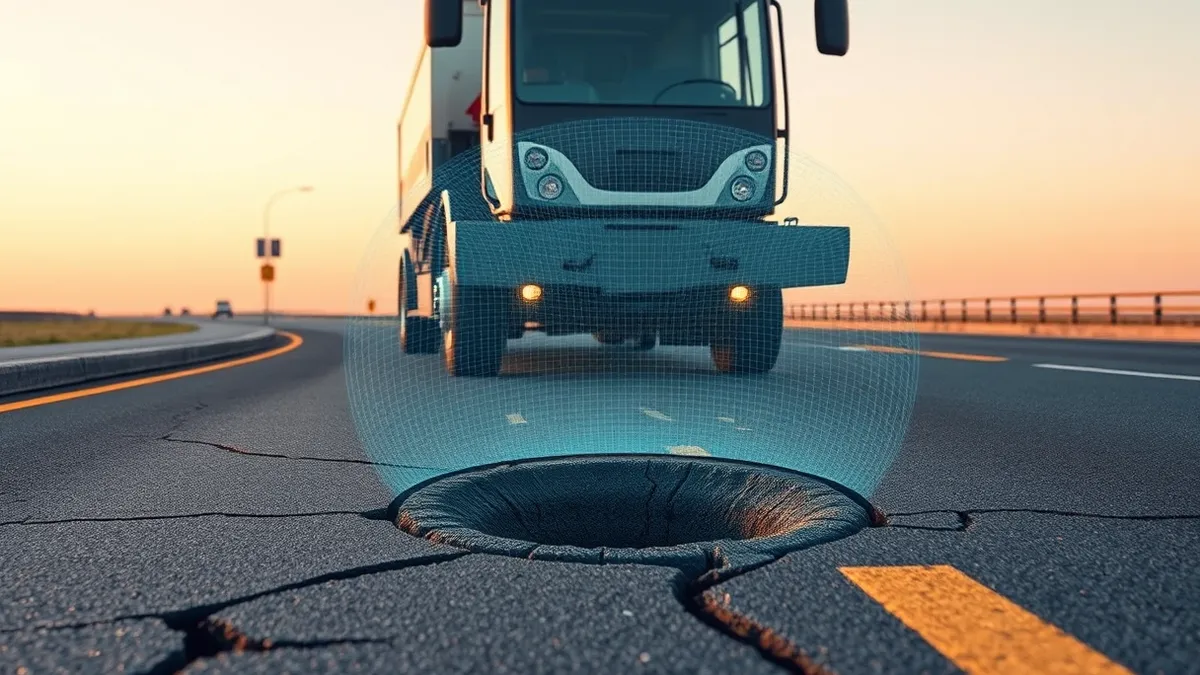
The technology relies on smart cameras mounted on the street sweeper trucks. As the vehicles drive over the roads, the cameras photograph potholes. The system then processes these images to determine the width and depth of each defect. This data is sent directly to road crews, allowing them to calculate the specific materials required for repairs. The technology provides exact dimensions to aid in planning.
What changes, what does not
The council plans to expand the project to include garbage trucks and other city vehicles. Officials also hope to use the technology to detect road sign faults, faded line markings, roadside rubbish, and missing drain lids. However, the current deployment is limited to two street sweepers. The council has not confirmed whether the expansion to other vehicle types has already begun or remains in the planning phase.unverified
What builders can do with it
Developers can build systems that integrate vehicle-mounted cameras with computer vision models to detect surface defects. The documented capability includes measuring width and depth, which allows for automated material estimation. Builders can design workflows that send geotagged images and measurements to maintenance crews. The system sends pictures and measurements to road crews, enabling precise repair planning. Limits include the need for specific vehicle mounting and the current focus on potholes rather than broader infrastructure health.
Why it matters
- Municipalities can leverage existing vehicle fleets for continuous infrastructure monitoring without significant new hardware costs.
- Automated measurement reduces the variability and time associated with manual inspection of road defects.
- Early detection of small potholes may lower long-term repair costs by preventing larger structural damage.
- The expansion to other defect types suggests a scalable model for comprehensive urban maintenance.
Topics: computer vision, municipal technology, infrastructure maintenance, AI deployment
Updated
Then / now / next
Road crews manually identified and measured potholes as part of routine maintenance.
AI cameras on street sweepers automatically detect and measure defects in real-time.
The council may expand the technology to other vehicles and additional defect types.
Story timeline
- Then Road crews manually identified and measured potholes as part of routine maintenance.
- Now AI cameras on street sweepers automatically detect and measure defects in real-time.
- Next The council may expand the technology to other vehicles and additional defect types.
The strongest doubt
Counterpoint from the sources
The council claims the program will save money, but no independent audit or long-term cost comparison has been published yet.
For readers
Policy
- Automated infrastructure monitoring can improve resource allocation for road maintenance budgets.
- Early intervention strategies may reduce the total cost of road repairs over time.
Developers
- Computer vision models can be integrated with vehicle-mounted cameras for real-time defect detection.
- Systems can output precise measurements to aid in material estimation and repair planning.
Business
- Municipal fleets can be repurposed for data collection without significant additional hardware investment.
- Automated inspection reduces the labor hours required for manual road surveys.
Ask the article
Local keyword search of this article; no generated answers.Did this article give you the evidence you needed?
Your choice stays on this device. No public tally.Questions readers ask
How does the AI system measure potholes?
Cameras mounted on street sweepers photograph the defects, and the system calculates width and depth from the images.
What vehicles are currently using this technology?
Two street sweeper trucks are currently equipped with the AI camera technology for the trial.
Will this system be used on other types of vehicles?
The council plans to potentially expand the program to garbage trucks and other city vehicles in the future.
Connected stories
Reading receipt
- The system provides width and depth measurements to help crews calculate material needs.
- Officials plan to expand the technology to garbage trucks and other municipal vehicles.