Key points
- AI companies are actively racing to construct new data centres.
- Power shortages represent a primary constraint on expansion efforts.
- Regulatory hurdles and local opposition further delay project timelines.
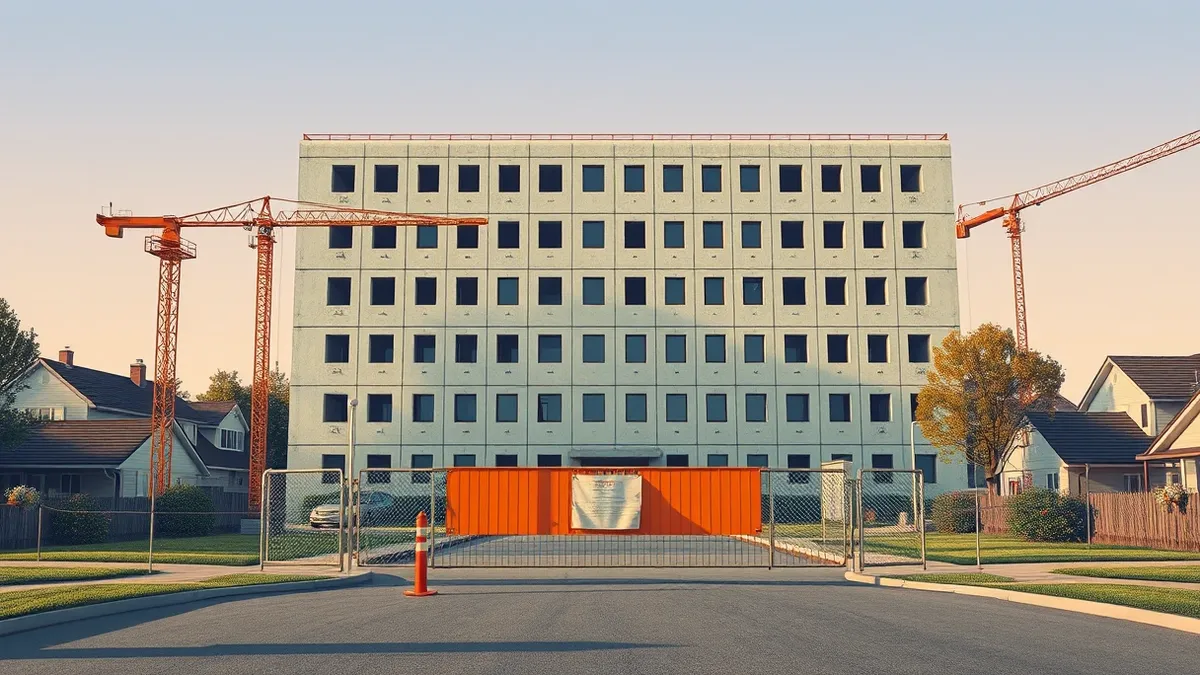
AI business outlets report that the next major bottleneck for artificial intelligence development lies outside the data centre itself. While firms continue to invest heavily in computational infrastructure, external factors are increasingly dictating the pace of growth.The growth of AI is being slowed by problems with electricity supply and local community resistance.Infrastructure scalability is now contingent on grid capacity and municipal regulatory frameworks rather than compute density. The race to build capacity is being impeded by resource availability and community relations rather than engineering limitations.
The figures
The source material does not provide specific numerical data regarding the scale of power shortages or the exact volume of delayed projects. No statistical figures on investment amounts, energy consumption rates or construction timelines are included in the report. The focus remains on qualitative assessments of the barriers facing the industry.
Behind the figures
The assessment originates from a report by AI Business, which identifies the specific constraints slowing expansion. The outlet categorises the obstacles into three distinct areas: power shortages, regulatory hurdles and local opposition. These categories suggest that the measurement of progress is tied to permitting and utility capacity rather than technical readiness alone.
What changes, what does not
The fundamental drive to build data centres remains unchanged, with companies continuing their race to expand capacity. What has changed is the limiting factor; growth is no longer solely dependent on hardware availability but on external infrastructure and social consent. The shift highlights a move from technical challenges to logistical and political ones.
What builders can do with it
Developers must account for infrastructure delays when planning deployment schedules, as data centre expansion is slowing due to external factors. The documented capabilities of AI systems are less relevant if the hosting infrastructure cannot be secured or permitted in time. Builders should anticipate longer lead times for scaling workloads due to power and regulatory constraints.
Why it matters
- Policy readers must recognise that technical AI advancement is increasingly coupled with urban planning and energy policy outcomes.
- Regulatory hurdles indicate that local government decisions will have a direct impact on global AI capacity availability.
- Local opposition suggests that community engagement strategies may become a critical component of infrastructure development plans.
- Power shortages highlight that energy grid upgrades are a prerequisite for further AI deployment, not an afterthought.
Topics: infrastructure, regulation, energy, data centres, AI deployment
Updated
The strongest doubt
Counterpoint from the sources
The source material does not present opposing viewpoints or suggest that these barriers are insurmountable; it simply identifies them as current slowing factors.
For readers
Policy
- Local opposition and regulatory hurdles are directly impacting infrastructure timelines.
Business
- Expansion plans must account for power shortages and permitting delays.
Developers
- Deployment schedules may be affected by external infrastructure bottlenecks.
Did this article give you the evidence you needed?
Your choice stays on this device. No public tally.Terms in this story
Data centre
Facility used by organisations for housing computer systems and associated components.
Regulatory hurdles
Legal and administrative obstacles that must be overcome to obtain permits or approvals.
Local opposition
Resistance from community members or local groups against proposed development projects.
Questions readers ask
What are the main reasons AI data centre expansion is slowing down?
Expansion is slowing due to power shortages, regulatory hurdles and local opposition, according to the published report
Is this a technical limitation or an external one?
The bottleneck is described as being outside the data centre, indicating external infrastructure and social barriers.
Are AI companies stopping their construction efforts?
No, companies are still racing to build, but the pace is being slowed by the identified external factors.
Connected stories
Reading receipt
- AI companies are actively racing to construct new data centres.
- Power shortages represent a primary constraint on expansion efforts.
- Regulatory hurdles and local opposition further delay project timelines.