Key points
- Ludo Robotics presented Ludi 0.2 at the 2026 Bay Area Robotics Symposium at UC Berkeley.
- The system builds on Ludi 0.1, which was introduced in August 2026.
- KRAFTON states its decades of game AI development inform its physical robotics work.
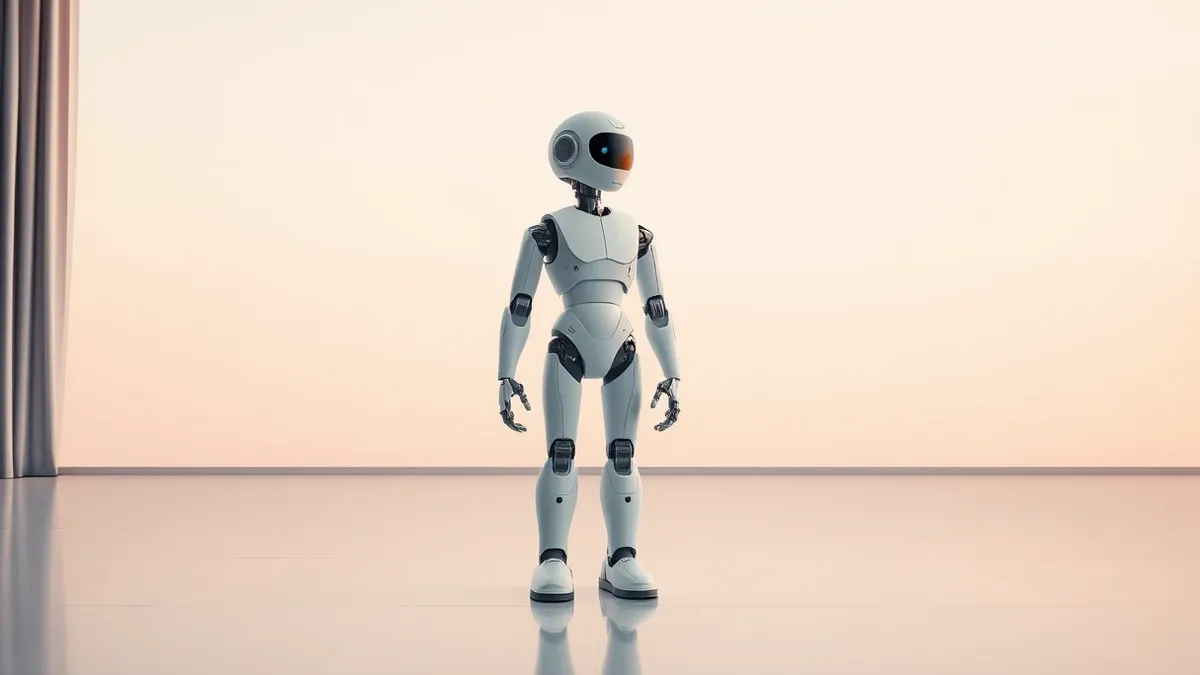
The release focuses on enabling robots to interpret human intent and respond to social cues during physical interactions. This presentation marks the latest step in the company’s expansion from virtual game environments into tangible robotic applications.KRAFTON’s robotics unit showed a new AI system that helps robots understand people better through social cues.Ludo Robotics presented Ludi 0.2 at BARS 2026, advancing social intelligence capabilities beyond the vision-language and navigation features of Ludi 0.1.
The figures
The subsequent Ludi 0.2 version was presented at the 2026 Bay Area Robotics Symposium. KRAFTON stated it has built games and virtual worlds for nearly two decades, providing a long history of real-time interaction data.
Behind the figures
The capabilities in Ludi 0.2 build directly upon the foundation established by Ludi 0.1. According to the report, Ludi 0.1 combined a vision-language model for reasoning and dialogue with specialised navigation and manipulation capabilities.reported This earlier version was designed to interpret spoken instructions, maintain conversational context and ask clarifying questions. Ludi 0.2 advances these features to support more natural human-robot interaction.
What changes, what does not
Ludi 0.2 introduces specific improvements in social intelligence, including better interpretation of human intent and responses to feedback. The core goal of understanding context and adapting to changing environments remains consistent with the company’s stated approach to general-purpose robotic intelligence.
What builders can do with it
Developers can leverage Ludi 0.2 to create robots that understand human intent and adapt to changing environments. The system allows for natural collaboration with people by interpreting behaviour and responding appropriately as situations evolve. The focus on social cues provides a documented interface for designing interactions that go beyond simple command execution.
Why it matters
- The transition from virtual game AI to physical robotics suggests a pathway for applying reinforcement learning and large language models to tangible hardware.
- Documented support for social cues and intent interpretation provides a specific capability set for developers building collaborative robot systems.
- KRAFTON’s stated experience with unpredictable player behaviour in games implies a potential advantage in handling dynamic real-world scenarios.
Topics: robotics, AI, KRAFTON, Ludo Robotics, Ludi
Updated
Then / now / next
Ludi 0.1 provided vision-language reasoning and navigation capabilities introduced in August 2026.
Ludi 0.2 adds social intelligence features for interpreting intent and social cues.
Developers may explore how these social capabilities perform in varied physical environments beyond the symposium presentation.
Story timeline
- Then Ludi 0.1 provided vision-language reasoning and navigation capabilities introduced in August 2026.
- Now Ludi 0.2 adds social intelligence features for interpreting intent and social cues.
- Next Developers may explore how these social capabilities perform in varied physical environments beyond the symposium presentation.
The strongest doubt
Counterpoint from the sources
The source material does not provide independent verification of the system's performance in real-world settings outside the symposium presentation.
For readers
Developers
- Can build robots that interpret human intent and respond to social cues using Ludi 0.2.
- May utilise the vision-language model for maintaining conversational context and asking clarifying questions.
Researchers
- Can observe the application of game-derived AI techniques, such as reinforcement learning, in physical robotics.
- May study the transition from virtual unpredictable player behaviour to physical human-robot collaboration.
Policy
- Should note the expansion of major game developers into physical robotic intelligence systems.
- May consider implications of robots interpreting social cues and human intent in public spaces.
Ask the article
Local keyword search of this article; no generated answers.Did this article give you the evidence you needed?
Your choice stays on this device. No public tally.Questions readers ask
What is the main improvement in Ludi 0.2 compared to Ludi 0.1?
Ludi 0.2 advances social intelligence by improving the ability to interpret human intent, respond to feedback and account for social cues.
Where was Ludi 0.2 presented?
It was presented at the 2026 Bay Area Robotics Symposium at UC Berkeley.
When was the previous version, Ludi 0.1, introduced?
Ludi 0.1 was introduced in August 2026.
Connected stories
Reading receipt
- Ludo Robotics presented Ludi 0.2 at the 2026 Bay Area Robotics Symposium at UC Berkeley.
- The system builds on Ludi 0.1, which was introduced in August 2026.
- KRAFTON states its decades of game AI development inform its physical robotics work.