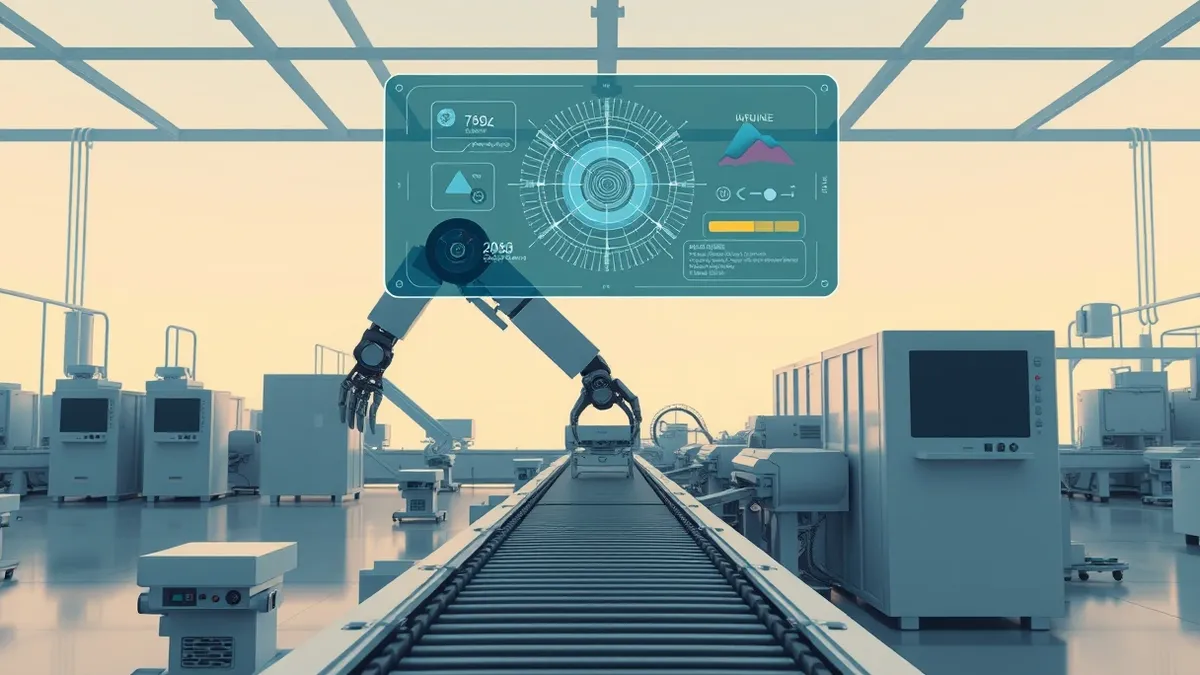
Key points
- Artificial intelligence is transforming traditional factories into smarter production environments.
- The report highlights predictive maintenance as a primary method for reshaping industrial production.
- The source material does not provide specific metrics, vendor names or implementation timelines.
Artificial intelligence is transforming traditional factories into smarter production environments, according to a report published by Bing News.reported The outlet summarises a headline stating that AI is reshaping industrial production.Artificial intelligence is helping factories work more efficiently by predicting when machines need repair.The report characterises the integration of AI in manufacturing as a transition towards algorithmically enhanced predictive maintenance and operational intelligence. The summary text explicitly mentions predictive maintenance as part of this transformation. The source material does not provide further details on the specific mechanisms or other methods involved in this shift.
The figures
The source material does not contain specific numerical data, percentages, revenue figures or adoption rates. The headline mentions "5 Ways" AI is reshaping production, but the summary text does not list these ways or provide any quantitative evidence. No vendor-specific benchmarks, market size estimates or performance metrics are included in the provided text.
Behind the figures
Because no quantitative data is present, there is no methodology described for measurement. The Bing News summary refers to a headline about five ways AI is reshaping production but does not explain how these were selected or validated. The report relies on a brief summary statement rather than empirical evidence or statistical analysis from independent researchers or industry bodies.
What changes, what does not
The material states that traditional factories are becoming smarter production environments. It identifies predictive maintenance as a key area of change. The report does not specify which legacy systems remain unchanged or which aspects of traditional manufacturing are resistant to AI integration. The scope of transformation is described broadly without detailing specific operational boundaries or limitations in current deployments.
What builders can do with it
Developers can note that predictive maintenance is cited as a way AI is reshaping production. Builders can observe that the transformation involves creating smarter production environments. The documented capabilities are limited to these general descriptions. Limits are not specified, so builders must assume standard integration constraints apply to these general transformations.
Why it matters
- Policy readers can see that AI adoption in manufacturing is framed as a shift towards smarter environments, suggesting regulatory focus may move towards operational intelligence standards.
- The mention of predictive maintenance indicates that downtime reduction is a key value proposition, which may influence labour and safety regulations in industrial settings.
- The lack of specific vendor or metric data in the report suggests the industry narrative is still conceptual, requiring policy makers to look for concrete implementation studies elsewhere.
- The broad nature of the transformation described implies that sector-specific guidelines may be needed to address diverse applications of AI in production environments.
Topics: manufacturing, AI, predictive maintenance, industrial automation, Bing News
Updated
Then / now / next
Traditional factories operated with conventional maintenance and production methods without explicit AI integration.
Artificial intelligence is transforming these environments into smarter production spaces, including predictive maintenance.
Further details on the other four ways AI is reshaping production may emerge from the full report.
Story timeline
- Then Traditional factories operated with conventional maintenance and production methods without explicit AI integration.
- Now Artificial intelligence is transforming these environments into smarter production spaces, including predictive maintenance.
- Next Further details on the other four ways AI is reshaping production may emerge from the full report.
The strongest doubt
Counterpoint from the sources
The source material presents only positive transformations and does not include any doubts, risks or opposing viewpoints regarding AI in manufacturing.
Ask the article
Local keyword search of this article; no generated answers.Did this article give you the evidence you needed?
Your choice stays on this device. No public tally.Questions readers ask
What specific AI applications are mentioned for factories?
The report highlights predictive maintenance as a primary way AI is reshaping industrial production environments.
Are there any statistics on factory AI adoption?
No specific statistics, percentages or adoption figures are provided in the Bing News summary.
Which vendors are leading this transformation?
The source material does not name any specific technology vendors or manufacturers involved in this shift.
Connected stories
Reading receipt
- Artificial intelligence is transforming traditional factories into smarter production environments.
- The report highlights predictive maintenance as a primary method for reshaping industrial production.
- The source material does not provide specific metrics, vendor names or implementation timelines.